

As plans for the coming season take shape, many corn and soybean growers continue looking for places to cut expenses. That’s understandable, but if those cuts are driven by emotion instead of hard numbers, they can create expensive mistakes.
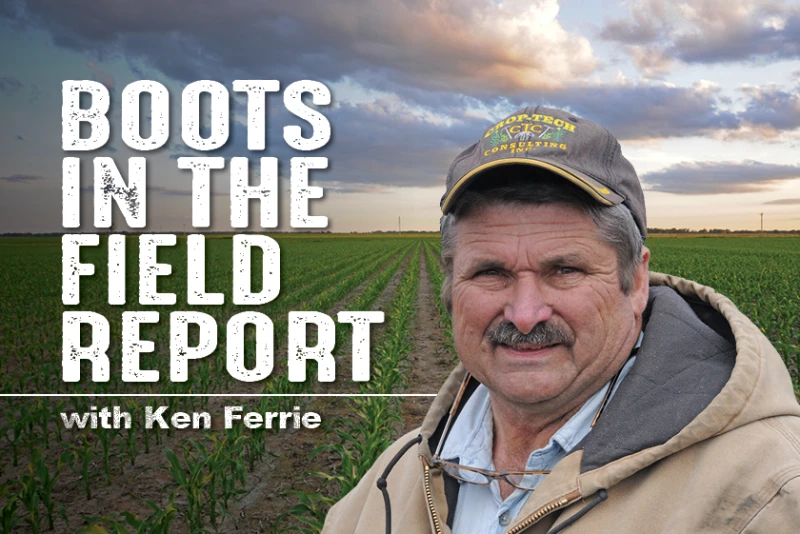
“I truly believe that to improve on what we are going to do, we need to evaluate what we have already done,” says Ken Ferrie, Farm Journal Field Agronomist. “Then, a good evaluation of our existing plan can involve actual numbers and less emotion.”
Ferrie likes to start the evaluation process with information from calibrated yield monitors and a disciplined, field‑by‑field review from the previous season.
“[It’s important to] sit down with your farm crew to evaluate each field, seeing how last year’s plan worked out, looking for answers to both the success and the disappointments of the past year,” he says.
Consider What You Had Control Over
A central theme to consider in the process is learning to separate what factors were under your control from those that weren’t. “Be sure to separate Mother Nature’s effect on yield from your management decisions,” he stresses.
Soybean crop performance is a good example of how weather impacted performance and was out of farmers’ control in parts of Illinois. Ferrie explains that in recent years, many growers have used a spread of maturities to manage risk, from roughly 2.6 to 4.2 group beans. That strategy experienced a hiccup when weather turned against full‑season beans this past summer.
“In areas where we saw little to no rain in August and early September locally, these full-season beans lacked the moisture needed to give us big beans,” Ferrie says. “What we saw is that the 3.5 to 4.2 group had kind of lackluster yield compared to the 2.5 to the 3.3 beans.”
The danger, he says, is if farmers react to this single year as if it provides a rule to follow. “If we don’t rely on past yield history and don’t plug in this last season’s weather conditions, we can make an emotional decision that late maturity beans don’t work for me, that I need to cut them from my lineup,” he explains.
But the whole point of using a wide maturity range is risk management. “When you plant a wide range of maturities to mitigate risk, you shouldn’t plan on hitting it out of the ballpark with all of them, because that seldom happens,” Ferrie says. “We don’t know what lies ahead for [2026] weather. We might have a drought. We might not.”
Corn tells a similar story. Weather during pollination—like the “days that we had the heavy fog during pollination” — are showing up clearly on yield maps. Good scouting records are critical for interpreting those maps correctly.
“Good scouting records from the pest team can help sort out pollination issues caused by weather,” he says. “When you combine your past data with this year’s scouting records and weather data, we make better decisions, what worked, what didn’t and why.”
Is Soil Insecticide On Your Cutting Block?
With budget tightening well underway, another recurring question Ferrie has been fielding from farmers is whether to cut soil insecticide on the planter. The answer, at least in Illinois, is to consider how much damage your corn crop is incurring from rootworm.
Field scouting this past season underscored how uneven rootworm pressure can be, according to Ferrie. One consideration is watching root feeding and beetle traps and beetle activity, because many times you can see the problem advancing toward your fields. But he cautions against knee-jerk reactions. For instance, he says to avoid making a decision to eliminate soil insecticide on the planter just because your neighbor is cutting it.
On the other hand, field data can support some risk‑taking where rootworm pressure truly is low. “If we’ve dug and done root washes that show very little rootworm feeding, and we put in some insecticide plots, and I’m seeing little to no response, it’s a lot easier to take the insecticide off the planter,” Ferrie says. But he adds a firm warning: “There’s no rescue for rootworm damage. Once the corn goes down, we can’t make it stand up.”
Assign A Pest Boss For Your Farm
Ferrie frequently addresses the importance and value a pest boss can deliver for your crops. He says to make sure and involve them in your planning meetings for the upcoming season.
“We talk about the importance of a good pest team and a pest boss… they can save your operation a lot of money and/or hassle,” he notes. “The insights they can provide during your winter meetings can help you create a successful and more cost-effective input use and management plan for the upcoming season.”
Reviewing calibrated yield data, scouting records, and using an honest assessment of weather and pest pressure by field are the tools that separate smart cuts from costly ones, Ferrie adds.
Here more about Ferrie’s instructions on making smart cuts for 2026 in his latest Boots In The Field podcast: